

What is the difference between a carbon steel and stainless steel Buttweld Equal Tee?
Jul 14, 2025
Leave a message
Hey there! As a supplier of Buttweld Equal Tees, I often get asked about the difference between carbon steel and stainless steel Buttweld Equal Tees. It's a question that's pretty important, especially if you're in the market for these types of pipe fittings. So, let's dive right in and break it down.
Composition and Basics
First off, let's talk about what makes these two materials different at the most fundamental level. Carbon steel is, as the name suggests, mainly made up of iron and carbon. The carbon content in carbon steel can vary, but generally, it's what gives the steel its strength and hardness. On the other hand, stainless steel is an alloy that contains iron, chromium, and usually some nickel. The chromium in stainless steel forms a thin, invisible layer of chromium oxide on the surface. This layer acts as a shield, protecting the steel from corrosion and giving it that shiny, "stainless" look.
Corrosion Resistance
One of the biggest differences between carbon steel and stainless steel Buttweld Equal Tees is their corrosion resistance. Carbon steel is prone to rusting when it comes into contact with moisture and oxygen. If you're using carbon steel Buttweld Equal Tees in an environment where they'll be exposed to water, humidity, or chemicals, you'll need to take extra precautions. You might have to coat them with paint or some other protective layer to prevent rusting.
Stainless steel, however, is a champ when it comes to corrosion resistance. Thanks to that chromium oxide layer, stainless steel Buttweld Equal Tees can withstand exposure to water, chemicals, and even some harsh industrial environments without rusting. This makes them a great choice for applications in the food and beverage industry, chemical processing plants, and marine environments.
Strength and Durability
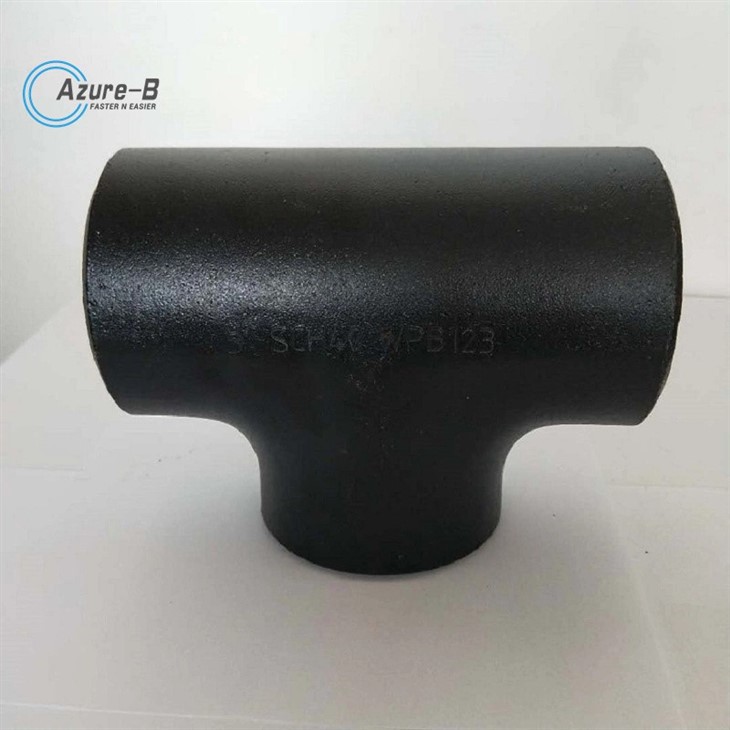
When it comes to strength, carbon steel Buttweld Equal Tees are no joke. They're known for their high tensile strength, which means they can handle a lot of pressure without breaking or deforming. This makes them a popular choice for high-pressure applications, like in oil and gas pipelines.
Stainless steel Buttweld Equal Tees are also strong, but their strength characteristics are a bit different. They're not as strong as carbon steel in terms of raw tensile strength, but they have better ductility. This means they can bend and stretch without cracking, which can be an advantage in some applications where the pipe fittings might be subject to movement or vibration.
Cost
Cost is always a factor when you're choosing between different materials for your pipe fittings. Carbon steel Buttweld Equal Tees are generally less expensive than stainless steel ones. This is because the raw materials for carbon steel are more abundant and the manufacturing process is simpler. If you're on a tight budget and corrosion isn't a major concern, carbon steel might be the way to go.
Stainless steel Buttweld Equal Tees, on the other hand, are more expensive. The higher cost is due to the more complex alloy composition and the manufacturing process. However, when you consider the long-term benefits of corrosion resistance and durability, the extra cost might be worth it, especially in applications where the pipe fittings need to last a long time.
Aesthetic Appeal
Let's not forget about how these two types of Buttweld Equal Tees look. Carbon steel has a more industrial, rugged look. It's often used in applications where appearance isn't a top priority.
Stainless steel, on the other hand, has a sleek, modern look. It's often used in applications where aesthetics are important, like in architectural or decorative installations. If you want your pipe fittings to look good as well as perform well, stainless steel might be the better choice.
Applications
The choice between carbon steel and stainless steel Buttweld Equal Tees also depends on the specific application. Carbon steel Buttweld Equal Tees are commonly used in the oil and gas industry, power generation plants, and general plumbing applications. They're also used in construction projects where strength and cost are the main considerations.
Stainless steel Buttweld Equal Tees are used in a wide range of industries, including the food and beverage industry, chemical processing, pharmaceuticals, and marine applications. Their corrosion resistance and aesthetic appeal make them a popular choice in these industries.
Where to Find Them
If you're interested in learning more about different types of pipe fittings, you can check out our Steel Reducing Tee Pipe Fittings page. It has a lot of useful information about reducing tee pipe fittings. We also have a page dedicated to Equal Tee, which can give you more details about Buttweld Equal Tees. And if you're looking for ASME B16.9 Unequal Tees, you can visit our ASME B16.9 Unequal Tee page.

Conclusion
So, there you have it - the main differences between carbon steel and stainless steel Buttweld Equal Tees. As a supplier, I know that choosing the right material for your pipe fittings is crucial. It can affect the performance, durability, and cost of your project. Whether you go for carbon steel or stainless steel, make sure you consider all the factors we've talked about.
If you're in the market for Buttweld Equal Tees or any other pipe fittings, I'd love to help you out. Just reach out, and we can discuss your specific needs and find the best solution for you.
References
- ASM Handbook Committee. (2004). ASM Handbook Volume 1: Properties and Selection: Irons, Steels, and High-Performance Alloys. ASM International.
- Pipe Fittings Handbook. (2005). McGraw-Hill Professional.