

What is the abrasion resistance of a Buttweld Equal Tee?
Aug 21, 2025
Leave a message
Hey there! As a supplier of Buttweld Equal Tees, I often get asked about the abrasion resistance of these nifty pipe fittings. So, I thought I'd take a deep dive into this topic and share some insights with you all.
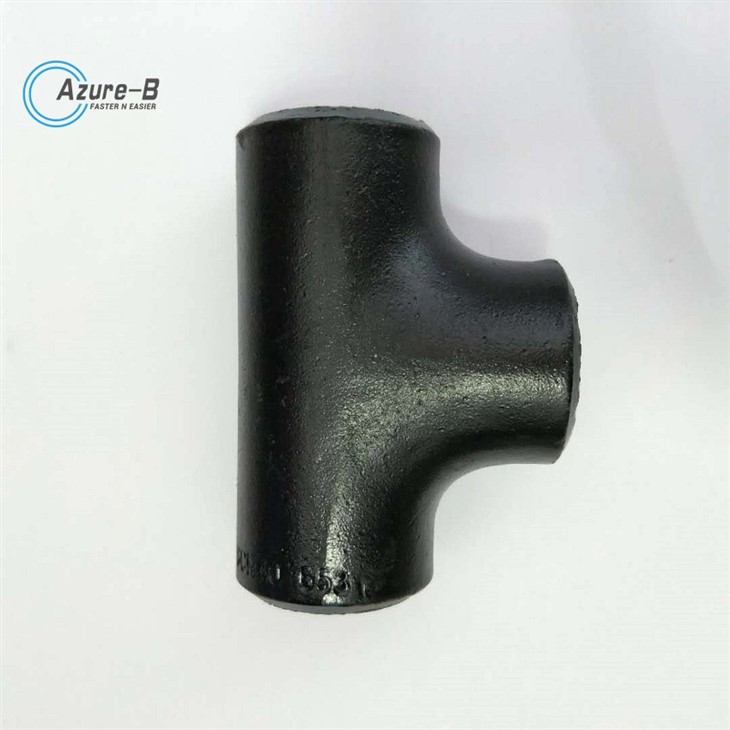
First off, let's understand what a Buttweld Equal Tee is. It's a type of pipe fitting that has three openings of the same size. It's commonly used in piping systems to connect three pipes of equal diameter, allowing the flow of fluid or gas to split or combine. These tees are made through a butt - welding process, which ensures a strong and reliable joint.
Now, onto the main topic - abrasion resistance. Abrasion is the process of wearing away a material's surface due to friction, usually caused by the movement of solid particles, liquids, or gases over it. In the case of Buttweld Equal Tees, abrasion resistance is crucial, especially in industries where the pipes carry abrasive substances.
The abrasion resistance of a Buttweld Equal Tee depends on several factors. One of the most important factors is the material it's made from. We usually offer tees made from carbon steel, stainless steel, and alloy steel. Each material has its own level of abrasion resistance.
Carbon steel Buttweld Equal Tees are widely used because they are relatively inexpensive and have decent mechanical properties. However, their abrasion resistance might not be as high as stainless steel or alloy steel. Carbon steel can rust when exposed to moisture, and rust can weaken the surface, making it more susceptible to abrasion. But in environments where the abrasive particles are not too harsh, carbon steel tees can still do a good job.
Stainless steel Buttweld Equal Tees, on the other hand, are known for their excellent corrosion and abrasion resistance. The chromium in stainless steel forms a thin, protective oxide layer on the surface, which prevents rusting and also provides a hard surface that can withstand abrasion. These tees are great for applications where the fluid or gas contains corrosive elements along with abrasive particles, like in chemical processing plants or marine environments.
Alloy steel Buttweld Equal Tees are designed to have enhanced properties. By adding elements like nickel, molybdenum, and vanadium, the alloy steel can have better strength, toughness, and abrasion resistance compared to carbon steel. Alloy steel tees are often used in high - stress applications, such as in oil and gas pipelines where the flow of crude oil or natural gas can carry sand and other abrasive particles.
Another factor that affects abrasion resistance is the manufacturing process. A well - made Buttweld Equal Tee with a smooth internal surface will have better abrasion resistance. During the manufacturing process, any rough edges or irregularities can cause turbulence in the fluid flow, which can increase the abrasion rate. Our manufacturing process ensures that the internal surface of the tees is as smooth as possible, reducing the chances of premature wear.
The thickness of the tee's wall also plays a role. A thicker - walled Buttweld Equal Tee can withstand more abrasion because it has more material to wear away before it fails. However, thicker walls also mean higher costs and more weight, so it's a balance that needs to be struck based on the specific application.
In some cases, we can also apply special coatings to the Buttweld Equal Tees to improve their abrasion resistance. These coatings can be made from materials like ceramic or polymer. Ceramic coatings are extremely hard and can provide excellent protection against abrasion, but they can be brittle. Polymer coatings, on the other hand, are more flexible and can absorb some of the impact from abrasive particles.

Now, let's talk about how abrasion resistance affects the performance and lifespan of Buttweld Equal Tees in different industries.
In the mining industry, where slurries containing large amounts of abrasive minerals are transported through pipes, the Buttweld Equal Tees need to have high abrasion resistance. If the tees wear out too quickly, it can lead to leaks, which not only cause environmental problems but also result in costly downtime for repairs. Our high - quality alloy steel or ceramic - coated tees are a great choice for mining applications.
In the power generation industry, especially in coal - fired power plants, the pipes carry coal ash and other abrasive materials. A Buttweld Equal Tee with poor abrasion resistance can lead to blockages and reduced efficiency. Stainless steel or coated tees can help ensure a smooth flow and longer service life of the piping system.
In the food and beverage industry, although the abrasive particles might not be as harsh as in mining or power generation, the tees still need to be resistant to abrasion to maintain the quality of the product. Stainless steel Buttweld Equal Tees are commonly used in this industry because they are hygienic and can withstand the mild abrasion caused by the flow of liquids and solids.
If you're in the market for Buttweld Equal Tees, you might also be interested in related products like Butt Weld Reducing Tee and Steel Reducing Tee Pipe Fittings. These fittings are useful when you need to connect pipes of different diameters. And of course, our Equal Tee is a reliable choice for applications where all three pipe diameters are the same.
We understand that every project has unique requirements, and that's why we offer a wide range of Buttweld Equal Tees in different materials, sizes, and wall thicknesses. Whether you need a tee for a small - scale plumbing project or a large - scale industrial application, we've got you covered.
If you're interested in learning more about our Buttweld Equal Tees or have any questions about abrasion resistance and how it applies to your specific needs, don't hesitate to reach out. We're here to help you make the right choice for your piping system.
References
- ASME B16.9 - Standard for Factory - Made Wrought Buttwelding Fittings
- API 5L - Specification for Line Pipe
- ASTM A234 - Standard Specification for Piping Fittings of Wrought Carbon Steel and Alloy Steel for Moderate and High - Temperature Service