

How does 5D Bend compare to plasma cutting in terms of shaping?
Jul 30, 2025
Leave a message
In the realm of metal shaping and fabrication, two prominent techniques stand out: 5D Bend and plasma cutting. As a dedicated 5D Bend supplier, I've witnessed firsthand the unique capabilities and limitations of both methods. In this blog post, I'll delve into a comprehensive comparison of 5D Bend and plasma cutting in terms of shaping, exploring their respective advantages, disadvantages, and ideal applications.
Understanding 5D Bend
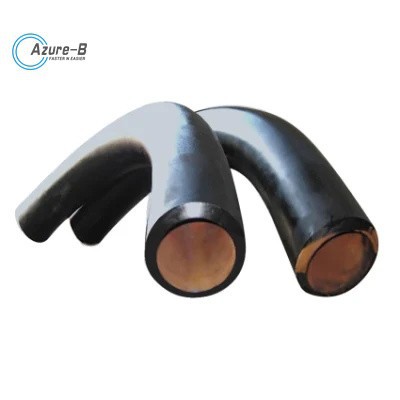
5D Bend is a specialized pipe bending technique that allows for the creation of complex, precise bends with a bend radius of five times the pipe's outer diameter. This process is achieved through a combination of mechanical force and heat, enabling the pipe to be shaped into various angles and curves without compromising its structural integrity. The result is a smooth, seamless bend that maintains the pipe's original cross-sectional shape, making it ideal for applications where aesthetics and functionality are paramount.
One of the key advantages of 5D Bend is its ability to produce bends with a high degree of accuracy and repeatability. This is particularly important in industries such as aerospace, automotive, and construction, where precise dimensions and tight tolerances are required. Additionally, 5D Bend can be used to create bends in a variety of materials, including carbon steel, stainless steel, and aluminum, making it a versatile solution for a wide range of applications.
Another benefit of 5D Bend is its ability to reduce waste and material costs. Unlike traditional bending methods, which often require the use of multiple joints and fittings, 5D Bend allows for the creation of continuous bends in a single piece of pipe. This not only reduces the amount of material required but also eliminates the need for additional welding and assembly, resulting in a more efficient and cost-effective manufacturing process.
Exploring Plasma Cutting
Plasma cutting is a thermal cutting process that uses a high-velocity jet of ionized gas (plasma) to melt and remove material from a workpiece. This process is commonly used to cut through a variety of metals, including steel, aluminum, and copper, and can be used to create a wide range of shapes and sizes.
One of the primary advantages of plasma cutting is its speed and efficiency. Plasma cutting can be performed at high speeds, allowing for the rapid production of parts and components. Additionally, plasma cutting can be used to cut through thick materials with relative ease, making it a popular choice for applications where large amounts of material need to be removed quickly.
Another benefit of plasma cutting is its versatility. Plasma cutting can be used to create a variety of shapes and sizes, including complex geometries and intricate designs. This makes it a popular choice for applications such as signage, art, and decorative metalwork.
However, plasma cutting also has some limitations. One of the main drawbacks of plasma cutting is its relatively low precision. Plasma cutting can produce rough edges and uneven surfaces, which may require additional finishing work to achieve the desired level of smoothness and accuracy. Additionally, plasma cutting can generate a significant amount of heat, which can cause distortion and warping in the workpiece.
Comparing 5D Bend and Plasma Cutting in Terms of Shaping
When it comes to shaping, 5D Bend and plasma cutting offer distinct advantages and disadvantages. Let's take a closer look at how these two techniques compare in terms of accuracy, versatility, speed, and cost.

Accuracy
In terms of accuracy, 5D Bend has a clear advantage over plasma cutting. 5D Bend can produce bends with a high degree of precision and repeatability, making it ideal for applications where tight tolerances are required. Plasma cutting, on the other hand, is less precise and can produce rough edges and uneven surfaces, which may require additional finishing work to achieve the desired level of accuracy.
Versatility
Both 5D Bend and plasma cutting are versatile techniques that can be used to create a wide range of shapes and sizes. However, 5D Bend is better suited for applications where complex bends and curves are required, while plasma cutting is better suited for applications where straight cuts and simple shapes are needed.
Speed
In terms of speed, plasma cutting has a clear advantage over 5D Bend. Plasma cutting can be performed at high speeds, allowing for the rapid production of parts and components. 5D Bend, on the other hand, is a slower process that requires more time and precision to achieve the desired results.
Cost
When it comes to cost, the choice between 5D Bend and plasma cutting depends on a variety of factors, including the size and complexity of the project, the material being used, and the desired level of accuracy. In general, 5D Bend is more expensive than plasma cutting due to the additional time and labor required to achieve the desired results. However, 5D Bend can also reduce waste and material costs by eliminating the need for additional joints and fittings.
Ideal Applications for 5D Bend and Plasma Cutting
Based on the above comparison, it's clear that 5D Bend and plasma cutting are best suited for different types of applications. Here are some examples of ideal applications for each technique:
Ideal Applications for 5D Bend
- Aerospace and Automotive Industries: 5D Bend is commonly used in the aerospace and automotive industries to create complex bends and curves in pipes and tubing. These applications require high precision and accuracy, making 5D Bend the ideal solution.
- Construction and Architecture: 5D Bend can be used in the construction and architecture industries to create decorative and functional elements, such as handrails, balustrades, and structural supports. The smooth, seamless bends produced by 5D Bend make it a popular choice for these applications.
- Oil and Gas Industry: 5D Bend is also used in the oil and gas industry to create bends in pipelines and other equipment. These applications require high strength and durability, making 5D Bend the ideal solution.
Ideal Applications for Plasma Cutting
- Signage and Art: Plasma cutting is commonly used in the signage and art industries to create intricate designs and shapes. The versatility of plasma cutting allows for the creation of a wide range of designs, from simple letters and numbers to complex images and patterns.
- Metal Fabrication: Plasma cutting is also used in the metal fabrication industry to cut through thick materials and create large parts and components. The speed and efficiency of plasma cutting make it a popular choice for these applications.
- Automotive and Marine Industries: Plasma cutting can be used in the automotive and marine industries to create custom parts and components, such as body panels, brackets, and frames. The ability to cut through a variety of materials makes plasma cutting a versatile solution for these applications.
Conclusion
In conclusion, 5D Bend and plasma cutting are two powerful techniques that offer distinct advantages and disadvantages in terms of shaping. As a 5D Bend supplier, I believe that 5D Bend is the ideal solution for applications where high precision, accuracy, and aesthetics are required. However, plasma cutting is also a valuable technique that offers speed, efficiency, and versatility.
If you're considering using 5D Bend or plasma cutting for your next project, I encourage you to contact me to discuss your specific needs and requirements. Our team of experts can provide you with detailed information about our products and services, as well as help you determine which technique is best suited for your application.
For more information about our Induction Pipe Bends, High Quality Welded Pipe Bend, and Hot Induction Pipe Bends, please visit our website or contact us directly. We look forward to working with you!
References
- Smith, J. (2020). Pipe Bending Techniques: A Comprehensive Guide. New York: Wiley.
- Jones, R. (2019). Plasma Cutting: Principles and Applications. London: Elsevier.
- Brown, S. (2018). Metal Fabrication: Techniques and Processes. Chicago: McGraw-Hill.