

What is the tolerance range of 5D Bend?
Oct 15, 2025
Leave a message
As a dedicated supplier of 5D bends, I've encountered numerous inquiries regarding the tolerance range of these essential components. In this blog post, I aim to provide a comprehensive understanding of what the tolerance range of 5D bends entails, why it matters, and how it impacts various industries.
Understanding 5D Bends
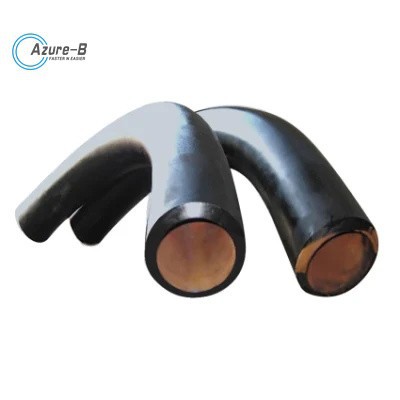
Before delving into the tolerance range, it's crucial to have a clear understanding of what 5D bends are. A 5D bend refers to a pipe bend where the centerline radius of the bend is five times the nominal diameter of the pipe. For example, if you have a pipe with a nominal diameter of 10 inches, a 5D bend for that pipe would have a centerline radius of 50 inches. These bends are commonly used in industries such as oil and gas, petrochemical, power generation, and shipbuilding, where smooth flow and reduced pressure drop are essential.
Importance of Tolerance Range
The tolerance range of 5D bends is of utmost importance as it directly affects the functionality and performance of the piping system. Tolerances define the allowable deviation from the specified dimensions of the bend. If the actual dimensions of the bend fall within the tolerance range, it ensures a proper fit and alignment within the piping system, minimizing the risk of leaks, pressure losses, and flow disturbances.
Factors Affecting Tolerance Range
Several factors influence the tolerance range of 5D bends. These include:

- Material Properties: Different materials have varying levels of ductility, strength, and thermal expansion coefficients. These properties can affect the bending process and the final dimensions of the bend. For instance, materials with high ductility may allow for more precise bending, resulting in tighter tolerances.
- Bending Method: The method used to bend the pipe can also impact the tolerance range. Common bending methods include cold bending, hot induction bending, and mandrel bending. Each method has its own advantages and limitations, which can affect the accuracy and consistency of the bend dimensions.
- Pipe Size and Wall Thickness: The size and wall thickness of the pipe play a significant role in determining the tolerance range. Larger pipes and thicker walls may require more force to bend, which can increase the likelihood of dimensional variations. Additionally, the bending process may cause more deformation in thicker walls, leading to wider tolerances.
- Industry Standards and Specifications: Different industries have their own standards and specifications for 5D bends. These standards define the acceptable tolerance ranges based on the specific requirements of the application. For example, the oil and gas industry may have stricter tolerances for bends used in high-pressure pipelines compared to other industries.
Typical Tolerance Ranges
The tolerance range for 5D bends can vary depending on the factors mentioned above. However, some typical tolerance ranges for common dimensions are as follows:
- Centerline Radius: The centerline radius of a 5D bend is typically specified with a tolerance of ±1% to ±3%. This means that the actual centerline radius of the bend can deviate from the specified value by up to 1% to 3%.
- Angle of Bend: The angle of bend is usually specified with a tolerance of ±1° to ±3°. This allows for a small deviation from the exact angle required for the piping system.
- Wall Thickness: The wall thickness of the bend is typically specified with a tolerance of ±12.5% to ±15%. This accounts for the variation in wall thickness that may occur during the bending process.
- Outside Diameter: The outside diameter of the bend is usually specified with a tolerance of ±0.5% to ±1%. This ensures a proper fit within the piping system and minimizes the risk of leaks.
Impact of Tolerance Range on Performance
The tolerance range of 5D bends can have a significant impact on the performance of the piping system. If the actual dimensions of the bend fall outside the specified tolerance range, it can lead to several issues, including:
- Leakage: A bend with an incorrect centerline radius or angle of bend may not fit properly within the piping system, resulting in gaps or misalignments. These gaps can allow fluid or gas to leak, leading to safety hazards and environmental pollution.
- Pressure Losses: Bends with dimensions outside the tolerance range can cause flow disturbances and increased turbulence, resulting in higher pressure losses. This can reduce the efficiency of the piping system and increase energy consumption.
- Flow Disturbances: Incorrect bend dimensions can also cause flow disturbances, such as swirls and eddies, which can affect the performance of downstream equipment. These disturbances can lead to uneven flow distribution, increased wear and tear on equipment, and reduced product quality.
Ensuring Quality and Compliance
As a supplier of 5D bends, it is our responsibility to ensure that our products meet the highest quality standards and comply with the relevant industry specifications. To achieve this, we employ several quality control measures, including:
- Precision Manufacturing Processes: We use state-of-the-art manufacturing processes and equipment to ensure the accuracy and consistency of our 5D bends. Our bending machines are equipped with advanced control systems that allow us to precisely control the bending parameters, such as the centerline radius, angle of bend, and wall thickness.
- Quality Testing and Inspection: We conduct rigorous quality testing and inspection procedures on all our products to ensure that they meet the specified tolerance ranges. This includes dimensional inspection using precision measuring tools, non-destructive testing (NDT) to detect any internal defects, and pressure testing to verify the integrity of the bend.
- Compliance with Industry Standards: We adhere to all relevant industry standards and specifications, such as ASTM, ASME, and API, to ensure that our products are suitable for use in a wide range of applications. Our products are also certified by independent third-party organizations, such as Lloyd's Register and TÜV, to demonstrate their quality and compliance.
Our Product Range
In addition to 5D bends, we also offer a wide range of other pipe bends and fittings to meet the diverse needs of our customers. Our product range includes High Quality Welded Pipe Bend, Induction Pipe Bends, and Hot Induction Pipe Bends. These products are available in various materials, sizes, and specifications to suit different applications.
Contact Us for Procurement
If you are in need of high-quality 5D bends or other pipe bends and fittings, please do not hesitate to contact us. Our team of experienced professionals is dedicated to providing you with the best products and services at competitive prices. We can work closely with you to understand your specific requirements and recommend the most suitable solutions for your application.
References
- ASME B16.9 - Factory-Made Wrought Steel Buttwelding Fittings
- ASTM A234 - Standard Specification for Piping Fittings of Wrought Carbon Steel and Alloy Steel for Moderate and High-Temperature Service
- API 5L - Specification for Line Pipe