

What is the difference between hot - bent and cold - bent carbon steel bends?
Oct 30, 2025
Leave a message
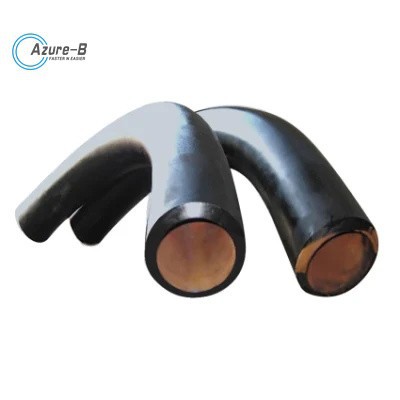
As a leading supplier of carbon steel bends, I often encounter inquiries about the differences between hot - bent and cold - bent carbon steel bends. Understanding these differences is crucial for customers to make informed decisions when selecting the appropriate type of bend for their projects. In this blog post, I will delve into the distinct characteristics, manufacturing processes, advantages, and applications of hot - bent and cold - bent carbon steel bends.

Manufacturing Processes
Hot - Bent Carbon Steel Bends
Hot - bending is a process that involves heating the carbon steel pipe to a high temperature, typically above the recrystallization temperature, which is around 700 - 900°C for most carbon steels. There are several methods for hot - bending, with induction bending being a popular choice.
Induction Pipe Bends are produced using an induction coil that heats a specific section of the pipe. As the pipe is heated, a bending force is applied to form the desired bend. The heating and bending process is carefully controlled to ensure uniform heating and precise bending angles. This method allows for the production of bends with a wide range of radii, including 5D Bend and other custom - designed radii.
Another common hot - bending method is the use of a furnace. The pipe is placed in a furnace and heated to the appropriate temperature. Once heated, it is removed from the furnace and bent using a bending machine. This method is suitable for large - scale production of bends with relatively simple geometries.
Cold - Bent Carbon Steel Bends
Cold - bending, as the name suggests, is performed at room temperature without heating the pipe. This process relies on mechanical force to deform the pipe into the desired bend shape. There are various cold - bending techniques, such as press bending and roll bending.
Press bending involves placing the pipe between a die and a punch. The punch applies a force to the pipe, causing it to bend around the die. This method is suitable for producing bends with small to medium radii and is often used for straight - sided bends.
Roll bending, on the other hand, uses a set of rolls to gradually bend the pipe. The pipe passes through the rolls, which apply a continuous bending force along the length of the pipe. Roll bending is ideal for producing bends with large radii and is commonly used in the production of circular or spiral bends.
Material Properties
Hot - Bent Carbon Steel Bends
The hot - bending process can have a significant impact on the material properties of carbon steel. When the steel is heated above the recrystallization temperature, the grains in the steel structure are refined. This results in improved ductility and toughness of the bent section. The hot - bending process also relieves internal stresses in the pipe, which can enhance the overall structural integrity of the bend.
However, the high - temperature heating can also cause some changes in the chemical composition of the steel. For example, there may be a slight loss of carbon due to oxidation at the surface of the pipe. To mitigate this, proper heat treatment and surface protection measures are often employed after the hot - bending process.
Cold - Bent Carbon Steel Bends
Cold - bending does not involve heating the steel, so the original material properties of the carbon steel are largely retained. This means that the strength and hardness of the steel remain relatively unchanged. However, cold - bending can introduce internal stresses in the bent section of the pipe. These internal stresses can make the bend more susceptible to cracking, especially under high - stress conditions.
To reduce the risk of cracking, cold - bent bends may require stress - relieving heat treatment after the bending process. This heat treatment helps to relieve the internal stresses and improve the ductility of the bent section.
Advantages and Disadvantages
Hot - Bent Carbon Steel Bends
Advantages
- Superior Ductility and Toughness: As mentioned earlier, the hot - bending process refines the grain structure of the steel, resulting in improved ductility and toughness. This makes hot - bent bends more suitable for applications where the bend may be subjected to dynamic loads or impact forces.
- Wide Range of Radii: Hot - bending techniques, such as induction bending, allow for the production of bends with a wide range of radii, including small and large radii. This provides greater flexibility in design and allows for the production of custom - shaped bends.
- Relieved Internal Stresses: The high - temperature heating during the hot - bending process relieves internal stresses in the pipe, reducing the risk of stress - related failures.
Disadvantages
- Higher Energy Consumption: The hot - bending process requires a significant amount of energy to heat the pipe to the appropriate temperature. This can result in higher production costs, especially for large - scale production.
- Surface Oxidation: The high - temperature heating can cause oxidation on the surface of the pipe, which may require additional surface treatment to remove or prevent corrosion.
Cold - Bent Carbon Steel Bends
Advantages
- Lower Energy Consumption: Cold - bending is performed at room temperature, so it requires less energy compared to hot - bending. This can result in lower production costs, especially for small - scale production.
- No Surface Oxidation: Since there is no high - temperature heating, there is no risk of surface oxidation. This eliminates the need for additional surface treatment to remove oxidation.
Disadvantages
- Internal Stresses: Cold - bending can introduce internal stresses in the bent section of the pipe, which may require stress - relieving heat treatment. This can add to the production time and cost.
- Limited Radii: Cold - bending techniques are generally more suitable for producing bends with small to medium radii. Producing bends with large radii using cold - bending methods can be challenging and may result in uneven bending.
Applications
Hot - Bent Carbon Steel Bends
Hot - bent carbon steel bends are commonly used in applications where high ductility, toughness, and precise bending radii are required. Some of the typical applications include:
- Oil and Gas Industry: Hot Induction Pipe Bends are widely used in oil and gas pipelines, where they need to withstand high - pressure and high - temperature conditions. The superior ductility and toughness of hot - bent bends make them suitable for these demanding applications.
- Power Generation: In power plants, hot - bent bends are used in steam pipes and boiler systems. The ability to produce bends with precise radii and the improved material properties make them ideal for these critical applications.
- Shipbuilding: Hot - bent carbon steel bends are used in the construction of ships, where they are required to withstand the harsh marine environment and dynamic loads.
Cold - Bent Carbon Steel Bends
Cold - bent carbon steel bends are often used in applications where cost - effectiveness and simple geometries are the main considerations. Some of the common applications include:
- Structural Applications: Cold - bent bends are used in building structures, such as frames and supports. The relatively simple bending process and lower cost make them a popular choice for these applications.
- Automotive Industry: Cold - bent bends are used in automotive exhaust systems and chassis components. The ability to retain the original material properties of the steel makes them suitable for these applications.
Conclusion
In conclusion, the choice between hot - bent and cold - bent carbon steel bends depends on various factors, including the application requirements, material properties, production cost, and design specifications. Hot - bent bends offer superior ductility, toughness, and a wide range of bending radii, but they come with higher energy consumption and potential surface oxidation issues. Cold - bent bends, on the other hand, are more cost - effective and do not suffer from surface oxidation, but they may require stress - relieving heat treatment due to internal stresses.
As a carbon steel bend supplier, I can provide you with high - quality hot - bent and cold - bent carbon steel bends to meet your specific needs. Whether you are in the oil and gas industry, power generation, shipbuilding, or any other industry, I have the expertise and resources to deliver the right bends for your project. If you are interested in learning more about our products or would like to discuss your requirements, please feel free to contact me for a detailed consultation and procurement negotiation.
References
- ASME B31.3 Process Piping Code
- API 5L Specification for Line Pipe
- ASTM A106 Specification for Seamless Carbon Steel Pipe for High - Temperature Service