

What are the seismic design considerations for Buttweld Elbows?
Aug 28, 2025
Leave a message
Hey there! I'm a supplier of Buttweld Elbows, and today I wanna chat about the seismic design considerations for these crucial pipeline components.
First off, let's understand why seismic design matters for Buttweld Elbows. In areas prone to earthquakes, pipelines are at risk of significant damage. Buttweld Elbows, being the points where the pipeline changes direction, are particularly vulnerable. Earthquakes can generate strong ground motions, which can cause excessive stress and strain on these elbows. If not designed properly, they can crack, leak, or even fail completely, leading to serious consequences like environmental pollution, loss of service, and potential safety hazards.
Material Selection
One of the most important seismic design considerations is the choice of material. The material used for Buttweld Elbows should have good ductility. Ductility allows the elbow to deform plastically under seismic loads without fracturing. Materials like carbon steel are commonly used because they offer a good balance between strength and ductility. For example, ASTM A234 WPB carbon steel is a popular choice. It can withstand a certain amount of deformation during an earthquake, absorbing the energy generated by the seismic waves.
Another aspect is the material's toughness. Toughness is the ability of the material to resist crack propagation. In seismic - prone regions, a material with high toughness can prevent small cracks from growing into large, catastrophic failures. Some high - strength alloy steels can also be considered, but they need to be carefully evaluated to ensure they meet the ductility and toughness requirements for seismic applications.
Wall Thickness
The wall thickness of Buttweld Elbows is a critical factor. A thicker wall can provide more strength and stiffness, which helps the elbow resist the forces generated during an earthquake. However, increasing the wall thickness also adds weight and cost to the pipeline system. So, it's a matter of finding the right balance.

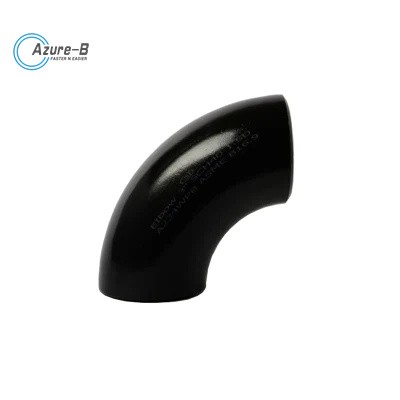
Engineers use various design codes and standards to determine the appropriate wall thickness. For instance, ASME B31.3 provides guidelines for calculating the minimum wall thickness based on factors such as the operating pressure, temperature, and the seismic zone where the pipeline is located. In high - seismic areas, the wall thickness may need to be increased compared to non - seismic regions.
Bend Radius
The bend radius of the Buttweld Elbow also plays a role in seismic design. A larger bend radius generally results in lower stress concentrations at the bend. During an earthquake, lower stress concentrations mean that the elbow is less likely to develop cracks.
For example, a long - radius elbow (LR elbow) with a bend radius of 1.5 times the nominal pipe diameter is often preferred in seismic applications over a short - radius elbow (SR elbow). The LR elbow distributes the seismic forces more evenly along the bend, reducing the risk of failure.
Welding Quality
Since Buttweld Elbows are joined to the pipeline by welding, the quality of the weld is of utmost importance. A poor - quality weld can act as a weak point in the system, especially during an earthquake. Welds should be inspected thoroughly to ensure they meet the required standards.
Non - destructive testing methods such as ultrasonic testing (UT), radiographic testing (RT), and magnetic particle testing (MT) can be used to detect any internal or surface defects in the weld. Proper welding procedures, including the use of the correct welding electrodes and techniques, are essential to ensure a strong and reliable weld.
Support and Anchoring
Proper support and anchoring of Buttweld Elbows are crucial for seismic design. The elbows should be supported in a way that allows them to move slightly during an earthquake without causing excessive stress on the pipeline. Flexible supports can be used to accommodate the movement and absorb some of the seismic energy.
Anchors are also important to prevent the pipeline from shifting or moving too much. They should be designed to withstand the seismic forces and be properly attached to a stable structure. For example, in a building, the anchors for the pipeline elbows can be attached to the building's structural frame.
Dynamic Analysis
Conducting a dynamic analysis of the pipeline system is a key step in seismic design. This analysis helps to understand how the Buttweld Elbows and the entire pipeline will respond to seismic loads. Computer - aided engineering (CAE) software can be used to simulate the seismic events and predict the stress and strain distribution in the elbows.
Based on the results of the dynamic analysis, engineers can make adjustments to the design, such as changing the wall thickness, bend radius, or support locations. This ensures that the Buttweld Elbows can safely withstand the expected seismic forces.
Connection Design
The connection between the Buttweld Elbow and other pipeline components is also a consideration. For example, if the elbow is connected to a flange, the flange connection should be designed to be strong enough to resist the seismic forces. The bolts used in the flange connection need to be properly tightened to prevent leakage and separation during an earthquake.
Some advanced connection designs, such as self - aligning or flexible connections, can be used to reduce the stress on the Buttweld Elbow during seismic events. These connections can accommodate small misalignments and movements, protecting the elbow from excessive stress.
Compliance with Standards
There are several industry standards that govern the seismic design of Buttweld Elbows. For example, ASME B31.8 and ASCE 7 provide guidelines for pipeline design in seismic - prone areas. These standards ensure that the Buttweld Elbows are designed, fabricated, and installed in a way that meets the safety requirements for seismic events.
As a Buttweld Elbow supplier, I always make sure that our products comply with these standards. We work closely with engineers and contractors to ensure that the elbows we supply are suitable for the specific seismic conditions of the project.
Some Product Examples
If you're in the market for Buttweld Elbows, we offer a variety of products. For instance, our 90 Degree Elbow Male Female is designed with high - quality carbon steel, meeting the seismic design requirements in many regions. It has a proper wall thickness and bend radius to ensure good performance during an earthquake.
Our Welded 90 Deg Elbow is another popular option. It's welded using the latest techniques to ensure a strong and reliable connection. And our ASME B16.28 Buttweld 90 Degree Elbow strictly follows the ASME standards, which are widely recognized for seismic - resistant pipeline design.
In conclusion, seismic design for Buttweld Elbows is a complex but essential process. It involves multiple factors such as material selection, wall thickness, bend radius, welding quality, support, and compliance with standards. By carefully considering these factors, we can ensure that the Buttweld Elbows can withstand the forces generated during an earthquake, protecting the pipeline system and the surrounding environment.
If you're interested in purchasing Buttweld Elbows for your project, especially in a seismic - prone area, feel free to reach out to us. We can provide you with detailed product information and work with you to select the most suitable elbows for your specific needs. Let's work together to build a reliable and earthquake - resistant pipeline system.
References
- ASME B31.3 Process Piping
- ASME B31.8 Gas Transmission and Distribution Piping Systems
- ASCE 7 Minimum Design Loads and Associated Criteria for Buildings and Other Structures
- ASTM A234 Standard Specification for Piping Fittings of Wrought Carbon Steel and Alloy Steel for Moderate and High - Temperature Service