

What are the common defects in steel pipe elbows?
Dec 17, 2025
Leave a message
Hey there! As a supplier of Steel Pipe Elbows, I've seen my fair share of defects in these crucial components. Steel pipe elbows are widely used in various industries, like oil and gas, construction, and plumbing. They allow pipes to change direction, which is super important for a well - functioning piping system. But sometimes, they come with a few problems that can affect their performance. So, let's dive into the common defects in steel pipe elbows.
1. Surface Cracks
Surface cracks are one of the most common issues with steel pipe elbows. These cracks can occur during the manufacturing process, especially when the steel is under excessive stress. For example, if the elbow is bent too quickly or at the wrong temperature, it can cause the surface to crack.
Another cause can be corrosion. Over time, exposure to moisture, chemicals, or other corrosive substances can weaken the steel's surface, leading to cracks. If you notice surface cracks on a Steel Pipe Elbow, it's a big red flag. These cracks can spread over time and compromise the integrity of the entire elbow, potentially leading to leaks or even failure of the piping system.
2. Weld Defects
Many steel pipe elbows are welded together, and welding defects are pretty common. One type of weld defect is lack of fusion. This happens when the weld metal doesn't fully bond with the base metal. It could be due to improper welding techniques, like incorrect welding speed or insufficient heat.
Porosity is another common weld defect. It looks like small holes in the weld. These holes are often caused by gas being trapped in the weld during the welding process. Maybe there was some moisture on the metal surface, or the shielding gas used during welding wasn't pure enough.
If you're looking for a Welded 90 Deg Elbow, it's crucial to check for these weld defects. A faulty weld can make the elbow weak and more likely to break under pressure.
3. Wall Thickness Variation
The wall thickness of a steel pipe elbow should be consistent. But sometimes, there can be variations in the wall thickness. This can be due to uneven rolling or bending during the manufacturing process.
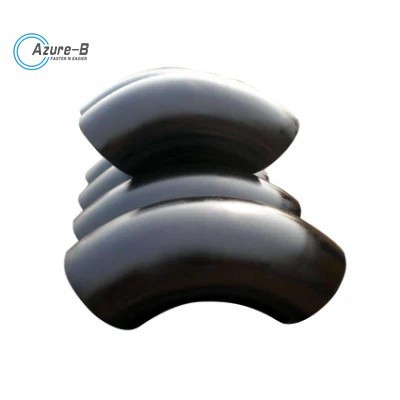
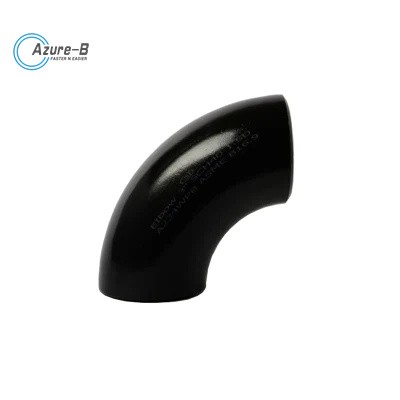
If an area of the elbow has a thinner wall than it should, it's more vulnerable to pressure. For instance, in high - pressure piping systems, a thin - walled area can bulge or even rupture. On the other hand, a thicker - than - normal wall can cause issues with flow velocity and pressure distribution in the pipe. So, checking the wall thickness of a Steel 90 Deg Elbow is essential to ensure its proper functioning.
4. Incorrect Dimensions
Getting the dimensions right is key for steel pipe elbows. Incorrect dimensions can lead to all sorts of problems. For example, if the elbow has the wrong angle, it won't fit properly into the piping system. A 90 - degree elbow that's actually 88 degrees won't make a proper connection, which can cause leaks or improper flow.
The outer diameter (OD) and inner diameter (ID) also need to be accurate. If the ID is too small, it can restrict the flow of fluids or gases through the pipe. And if the OD is off, it can be difficult to connect the elbow to other pipes. These dimension issues can waste a lot of time and money during installation and can even lead to system failures down the line.
5. Internal Inclusions
Internal inclusions are non - metallic substances that get trapped inside the steel during the manufacturing process. These can be things like slag, oxide, or sulfide. Inclusions can weaken the steel and make it more prone to cracking and corrosion.
They can also affect the mechanical properties of the steel, such as its strength and ductility. For example, a large inclusion can act as a stress concentrator, causing the elbow to fail under relatively low stress. Detecting internal inclusions often requires special testing methods, like ultrasonic testing or X - ray inspection.
6. Corrosion
Corrosion is a major headache in the world of steel pipe elbows. There are different types of corrosion, like uniform corrosion, pitting corrosion, and galvanic corrosion.
Uniform corrosion is when the entire surface of the elbow gradually wears away. This is often caused by exposure to a corrosive environment, like a chemical - filled pipeline. Pitting corrosion, on the other hand, creates small holes or pits on the surface of the steel. These pits can quickly penetrate the wall of the elbow and cause leaks.
Galvanic corrosion occurs when two different metals are in contact in the presence of an electrolyte. For example, if a steel elbow is connected to a copper pipe without proper insulation, galvanic corrosion can occur. This type of corrosion can be especially destructive and can lead to rapid failure of the elbow.
7. Heat - Affected Zone (HAZ) Issues
When a steel pipe elbow is welded or heat - treated, there's a zone near the weld or heat source called the heat - affected zone (HAZ). The properties of the steel in this zone can change due to the heat.
The HAZ can become harder and more brittle than the rest of the elbow. This can make it more likely to crack, especially under stress. Factors like the welding process, the type of steel, and the heat input can all affect the properties of the HAZ. If the HAZ isn't properly managed, it can lead to long - term problems with the elbow's performance.
Conclusion
So, there you have it - the common defects in steel pipe elbows. As a supplier, I understand how important it is to provide high - quality elbows that are free from these issues. When you're sourcing steel pipe elbows for your project, make sure to have them thoroughly inspected for these defects.
If you're in the market for reliable Steel Pipe Elbows, don't hesitate to reach out. We have a wide range of products that meet strict quality standards. Whether you need a Welded 90 Deg Elbow or a Steel 90 Deg Elbow, we've got you covered. Let's start a conversation and see how we can help with your piping needs!
References
- "Steel Pipe and Tube Handbook" by George E. Totten
- "Welding Metallurgy" by John C. Lippold and David J. Kotecki
- Industry standards and guidelines related to steel pipe elbows and manufacturing processes.