

What are the sealing requirements for ASME B16.5 Flanges?
Jan 06, 2026
Leave a message
ASME B16.5 is a widely recognized standard in the industry for pipe flanges and flanged fittings. As a supplier of ASME B16.5 Flanges, I understand the critical importance of adhering to the sealing requirements specified by this standard. In this blog post, I will delve into the various sealing requirements for ASME B16.5 Flanges, providing valuable insights for those involved in the procurement and use of these essential components.
Understanding ASME B16.5 Flanges
Before we explore the sealing requirements, it's essential to have a basic understanding of ASME B16.5 Flanges. These flanges are manufactured in accordance with the American Society of Mechanical Engineers (ASME) standard B16.5, which covers flanges and flanged fittings in sizes NPS 1/2 through NPS 24, with pressure ratings from Class 150 to Class 2500. They are commonly used in a variety of industries, including oil and gas, chemical, power generation, and water treatment, to connect pipes, valves, pumps, and other equipment.

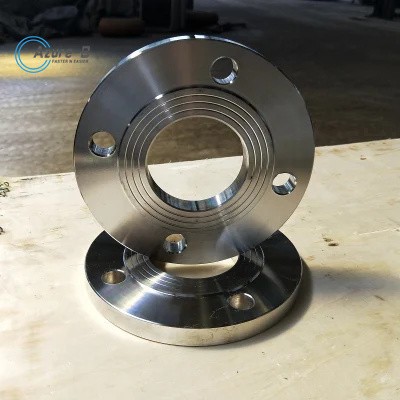
ASME B16.5 Flanges come in different types, such as weld neck, slip-on, socket weld, threaded, and blind flanges, each designed for specific applications and installation requirements. The standard also specifies the dimensions, materials, and testing requirements for these flanges to ensure their quality and performance.
Sealing Requirements for ASME B16.5 Flanges
The sealing performance of ASME B16.5 Flanges is crucial to prevent leakage of fluids or gases in a piping system. Several factors contribute to achieving a reliable seal, including the flange face finish, gasket selection, bolt tightening procedures, and operating conditions. Let's take a closer look at each of these aspects.
Flange Face Finish
The flange face finish plays a significant role in the sealing performance of ASME B16.5 Flanges. The standard specifies the acceptable surface roughness for different types of flange faces, such as raised face (RF), flat face (FF), and ring joint face (RTJ). A smooth and uniform flange face finish helps to ensure proper contact between the flange and the gasket, minimizing the risk of leakage.
For raised face flanges, the surface roughness should typically be between 125 and 250 micro-inches (3.2 and 6.3 micrometers) Ra. This range provides a good balance between gasket seating and resistance to leakage. Flat face flanges usually have a slightly smoother finish, with a surface roughness of 125 to 200 micro-inches (3.2 and 5.1 micrometers) Ra. Ring joint face flanges, on the other hand, require a very smooth finish, typically between 63 and 125 micro-inches (1.6 and 3.2 micrometers) Ra, to ensure a tight seal with the ring gasket.
Gasket Selection
Choosing the right gasket is essential for achieving a reliable seal with ASME B16.5 Flanges. The gasket material, type, and dimensions should be selected based on the operating conditions, including the pressure, temperature, fluid compatibility, and flange type.
There are several types of gaskets available for use with ASME B16.5 Flanges, such as spiral wound gaskets, sheet gaskets, ring gaskets, and metal-jacketed gaskets. Spiral wound gaskets are commonly used in high-pressure and high-temperature applications due to their excellent sealing performance and resilience. Sheet gaskets, made of materials such as rubber, cork, or graphite, are suitable for low-pressure and low-temperature applications. Ring gaskets, such as octagonal and oval ring gaskets, are used with ring joint face flanges to provide a metal-to-metal seal. Metal-jacketed gaskets combine the advantages of metal and soft filler materials, offering good sealing performance and resistance to high temperatures and pressures.
When selecting a gasket, it's important to ensure that it meets the requirements of the ASME B16.20 standard, which specifies the dimensions and materials for gaskets used with ASME B16.5 Flanges. The gasket should also be compatible with the fluid or gas being transported in the piping system to prevent chemical reactions or degradation.
Bolt Tightening Procedures
Proper bolt tightening is crucial to ensure a uniform and adequate clamping force on the gasket, which is essential for achieving a reliable seal with ASME B16.5 Flanges. The bolt tightening procedure should follow the guidelines specified in the ASME PCC-1 standard, which provides recommendations for bolted flange joint assembly.
The first step in the bolt tightening process is to ensure that the bolts and nuts are clean, free of damage, and properly lubricated. The lubricant helps to reduce friction between the threads and the flange surface, allowing for more accurate torque application. Next, the bolts should be tightened in a sequential pattern, typically in a star or circular pattern, to ensure uniform distribution of the clamping force.
The recommended torque values for the bolts depend on several factors, such as the bolt size, material, and the operating conditions of the piping system. These values can be found in the ASME B16.5 standard or the manufacturer's specifications. It's important to use a calibrated torque wrench to ensure accurate torque application and to avoid over-tightening or under-tightening the bolts, which can lead to gasket failure or leakage.
Operating Conditions
The operating conditions of the piping system, such as the pressure, temperature, and fluid properties, can also affect the sealing performance of ASME B16.5 Flanges. High pressures and temperatures can cause the flange and gasket materials to expand or contract, which can lead to changes in the clamping force and the sealing performance.
In high-pressure applications, it's important to use flanges and gaskets that are designed to withstand the pressure without deformation or leakage. The flange thickness, bolt size, and gasket material should be selected based on the maximum operating pressure of the system. In high-temperature applications, the flange and gasket materials should have good thermal stability and resistance to oxidation and corrosion.
The fluid properties, such as the viscosity, corrosiveness, and toxicity, also need to be considered when selecting the flange and gasket materials. For example, in corrosive environments, it's important to use flanges and gaskets made of corrosion-resistant materials, such as stainless steel or nickel alloys.
Importance of Meeting Sealing Requirements
Meeting the sealing requirements for ASME B16.5 Flanges is essential for ensuring the safety, reliability, and efficiency of a piping system. A leak in a piping system can lead to several problems, such as loss of product, environmental pollution, equipment damage, and safety hazards.
By adhering to the sealing requirements specified by the ASME B16.5 standard, you can minimize the risk of leakage and ensure the long-term performance of your piping system. This not only helps to protect the environment and the health and safety of your employees but also reduces maintenance costs and downtime associated with leak repairs.
Conclusion
As a supplier of Flanges As Per ASME B16.5, I understand the critical importance of meeting the sealing requirements for these flanges. By paying attention to the flange face finish, gasket selection, bolt tightening procedures, and operating conditions, you can ensure a reliable seal and prevent leakage in your piping system.
If you are in the market for high-quality ASME B16.5 Class 150 Forged Flanges or other ASME B16.5 Flange products, I encourage you to contact us for more information. Our team of experts can help you select the right flanges and gaskets for your specific application and provide you with the technical support you need to ensure a successful installation.
References
- American Society of Mechanical Engineers (ASME). B16.5 - Pipe Flanges and Flanged Fittings.
- American Society of Mechanical Engineers (ASME). B16.20 - Gaskets for Pipe Flanges.
- American Society of Mechanical Engineers (ASME). PCC-1 - Guidelines for Pressure Boundary Bolted Flange Joint Assembly.