

Is 5D Bend environmentally friendly?
Jun 27, 2025
Leave a message
Is 5D Bend Environmentally Friendly?
As a supplier of 5D bends, I often encounter questions from clients about the environmental friendliness of our products. In this blog post, I will delve into the various aspects of 5D bends and their impact on the environment.
First, let's understand what 5D bends are. A 5D bend refers to a pipe bend where the radius of curvature is five times the outside diameter of the pipe. These bends are widely used in industries such as oil and gas, power generation, and chemical processing due to their ability to provide smooth flow of fluids and gases, reducing pressure drop and improving overall system efficiency.
One of the key factors in determining the environmental friendliness of 5D bends is the manufacturing process. There are different methods to produce 5D bends, including hot induction bending and welding.
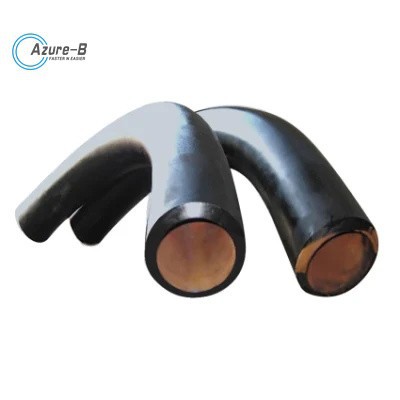

Hot induction bending is a process where a localized area of the pipe is heated using an induction coil and then bent to the desired shape. This method offers several environmental benefits. Firstly, it is a relatively energy - efficient process compared to some other manufacturing techniques. The induction heating allows for precise control of the heating zone, minimizing the amount of energy wasted on heating unnecessary areas of the pipe. Moreover, it produces less scrap material. During the hot induction bending process, the pipe is bent without the need for cutting and joining large sections, which reduces the amount of waste generated. You can learn more about this process by visiting our Hot Induction Pipe Bends page.
On the other hand, welded 5D bends are made by joining pre - bent sections or by welding a bent shape onto a straight pipe. High - quality welded pipe bends are also a popular choice in many applications. While welding does consume energy and may involve the use of filler materials, modern welding techniques have become more efficient and environmentally friendly. For instance, the development of low - hydrogen welding electrodes has reduced the emissions of harmful gases during the welding process. Additionally, proper welding procedures can ensure strong and durable joints, which means longer - lasting 5D bends and less need for frequent replacements. You can find more information about our High Quality Welded Pipe Bend on our website.
Another aspect to consider is the material used in 5D bends. Most 5D bends are made from carbon steel, which is a widely available and recyclable material. Carbon steel can be recycled multiple times without significant loss of its properties. At the end of the service life of a 5D bend, the carbon steel can be collected, melted down, and reused to make new products. This reduces the demand for virgin materials and helps in conserving natural resources.
In terms of the environmental impact during the operation of systems using 5D bends, these bends play a positive role. As mentioned earlier, 5D bends provide smooth flow paths for fluids and gases. This reduces the energy consumption of pumps and compressors in the system. For example, in a pipeline transporting oil, a well - designed 5D bend can minimize the resistance to the flow of oil, resulting in lower pumping power requirements. Over the long term, this can lead to significant energy savings and a reduction in greenhouse gas emissions associated with the operation of the system.
However, it is important to note that like any industrial product, there are also some potential environmental challenges associated with 5D bends. For example, during the manufacturing process, there may be emissions of pollutants such as particulate matter and greenhouse gases. But with strict environmental regulations and the implementation of advanced pollution control technologies, these emissions can be effectively controlled.
In the case of hot induction bending, the induction heating equipment needs to be properly maintained to ensure its energy efficiency. Any inefficiencies in the equipment can lead to increased energy consumption and higher environmental impact. Similarly, for welded bends, proper ventilation systems should be in place during the welding process to capture and treat the fumes generated.
When it comes to the transportation of 5D bends, it is essential to optimize the shipping routes and methods. By using more fuel - efficient vehicles and consolidating shipments, we can reduce the carbon footprint associated with the transportation of our products.
Overall, 5D bends can be considered environmentally friendly when produced using modern and efficient manufacturing processes, made from recyclable materials, and used in well - designed systems. At our company, we are committed to minimizing the environmental impact of our 5D bends throughout their life cycle. We continuously invest in research and development to improve our manufacturing processes, reduce energy consumption, and control emissions.
If you are interested in purchasing 5D bends for your project, we invite you to contact us for a detailed discussion. Our team of experts can provide you with more information about our products, their environmental features, and how they can meet your specific requirements. You can also explore our Induction Pipe Bends page to learn more about our product range.
In conclusion, the environmental friendliness of 5D bends is a multi - faceted issue. While there are some challenges, the benefits in terms of energy efficiency, recyclability, and long - term performance make them a sustainable choice for many industries. We encourage you to consider these factors when making your purchasing decisions and look forward to the opportunity to work with you.
References
- "Handbook of Pipe Bending Technology"
- Industry reports on carbon steel recycling and manufacturing processes.