

What welding methods are suitable for flanges?
Oct 08, 2025
Leave a message
Hey there! As a flange supplier, I often get asked about the best welding methods for flanges. It's a crucial topic because the right welding method can make a huge difference in the performance and durability of the flange connections. In this blog, I'll share some insights on what welding methods are suitable for flanges.

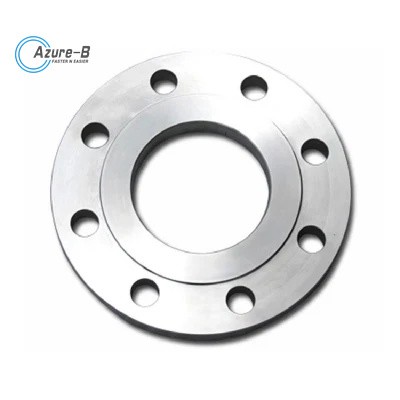
First off, let's understand why welding is so important for flanges. Flanges are used to connect pipes, valves, and other equipment in various industries like oil and gas, chemical, and power generation. A proper weld ensures a secure and leak - free connection, which is essential for the safe and efficient operation of these systems.
Shielded Metal Arc Welding (SMAW)
SMAW, also known as stick welding, is one of the oldest and most widely used welding methods. It's a versatile option that can be used in different environments, including outdoor and field applications. The process involves using a consumable electrode coated with flux. When the electrode is struck against the workpiece, an arc is formed, melting the electrode and the base metal to create a weld.
One of the main advantages of SMAW for flange welding is its simplicity. It doesn't require complex equipment, and welders can easily learn the technique. It's also suitable for welding different types of flanges, including ANSI B16.5 Class 2500 Flanges. However, SMAW has some limitations. The welding speed is relatively slow, and the quality of the weld can be affected by the skill of the welder. Also, it produces a lot of slag that needs to be removed after welding.
Gas Tungsten Arc Welding (GTAW)
GTAW, or TIG (Tungsten Inert Gas) welding, is a high - quality welding method. In this process, a non - consumable tungsten electrode is used to create the arc, and an inert gas (usually argon) is used to protect the weld area from oxidation.
GTAW is known for its precision and the ability to produce clean, high - quality welds. It's great for thin - walled flanges and applications where appearance and weld integrity are critical. For example, when welding ASME B16.5 Class 600 Blind Flange, GTAW can ensure a smooth and strong weld. But GTAW is also more expensive and time - consuming compared to SMAW. It requires a higher level of skill from the welder, and the equipment is more complex.
Gas Metal Arc Welding (GMAW)
GMAW, or MIG (Metal Inert Gas) welding, uses a continuous solid wire electrode that is fed through a welding gun. An inert or semi - inert gas is used to shield the weld from the atmosphere.
This method is fast and efficient, making it suitable for high - volume flange welding. It can be used for both thin and thick flanges, including Flange ASME B16.5 Class 150. GMAW offers good control over the welding process and can produce consistent welds. However, it's more sensitive to wind and draft, which can disrupt the gas shield and affect the weld quality.
Submerged Arc Welding (SAW)
SAW is a high - productivity welding method commonly used for thick - walled flanges. In this process, the arc is submerged under a layer of granular flux. The flux protects the weld from oxidation and contamination, and it also helps in the formation of a smooth weld bead.
SAW can deposit a large amount of filler metal quickly, making it ideal for heavy - duty applications. It produces high - quality welds with excellent mechanical properties. But the equipment for SAW is more complex and expensive, and it's mainly suitable for flat or horizontal welding positions.
Factors to Consider When Choosing a Welding Method
- Flange Material: Different flange materials, such as carbon steel, stainless steel, and alloy steel, may require different welding methods. For example, stainless steel flanges often need a welding method that can prevent oxidation, like GTAW.
- Flange Thickness: Thicker flanges usually need a welding method with high deposition rates, such as SAW or GMAW. Thin - walled flanges may be better suited for GTAW to avoid overheating.
- Application and Environment: If the flange is going to be used in a corrosive environment, a welding method that can produce a corrosion - resistant weld is essential. Outdoor applications may require a method that is less affected by weather conditions, like SMAW.
- Weld Quality Requirements: For critical applications where the weld integrity is of utmost importance, a high - quality welding method like GTAW may be necessary.
As a flange supplier, I understand that choosing the right welding method is a crucial decision for our customers. We always recommend consulting with a professional welder or an engineer to determine the most suitable welding method for your specific flange application.
If you're in the market for high - quality flanges and need advice on welding methods, feel free to reach out. We're here to help you make the best choices for your projects. Whether you need ANSI B16.5 Class 2500 Flanges, ASME B16.5 Class 600 Blind Flange, or Flange ASME B16.5 Class 150, we've got you covered. Contact us today to start a conversation about your flange needs.
References
- American Welding Society (AWS) Welding Handbook
- ASME Boiler and Pressure Vessel Code
- API Standards for Flanges and Welding