

What are the flow separation phenomena in ASME B16.9 Unequal Tee?
May 12, 2025
Leave a message
Flow separation phenomena are crucial aspects to understand in the context of ASME B16.9 Unequal Tee, which is a significant component in piping systems. As a trusted supplier of ASME B16.9 Unequal Tee, I have witnessed firsthand the importance of comprehending these phenomena for ensuring the efficient and reliable operation of piping networks.
Understanding ASME B16.9 Unequal Tee
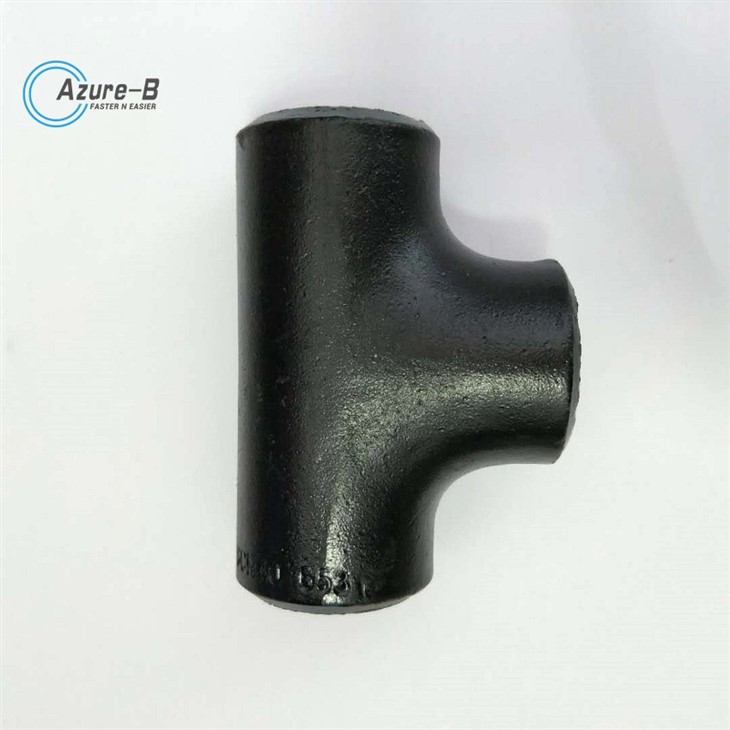
The ASME B16.9 standard covers factory-made wrought steel buttwelding fittings, including Unequal Tees. An Unequal Tee is a fitting that has one outlet of a different size from the other two. It is used to split or combine the flow of fluids in a piping system. The different sizes of the branches create a complex flow pattern, which can lead to flow separation under certain conditions.
What is Flow Separation?
Flow separation occurs when the boundary layer of a fluid flowing over a surface detaches from the surface. In the case of an ASME B16.9 Unequal Tee, this typically happens at the junction of the main pipe and the branch pipe. The change in geometry causes a sudden change in the flow direction and velocity, leading to a region of low pressure and a subsequent separation of the flow from the inner wall of the tee.
When the fluid enters the tee, it experiences a sudden expansion or contraction depending on the size of the branch. This change in cross - sectional area disrupts the smooth flow of the fluid. The fluid near the wall slows down due to viscous forces, and if the adverse pressure gradient (a pressure increase in the direction of flow) is large enough, the flow in the boundary layer will reverse. This reverse flow causes the boundary layer to separate from the wall, creating a region of recirculating flow or a wake.
Factors Influencing Flow Separation in ASME B16.9 Unequal Tee
Several factors can influence the occurrence and severity of flow separation in an ASME B16.9 Unequal Tee:
1. Flow Velocity
Higher flow velocities generally increase the likelihood of flow separation. As the fluid moves faster, the forces acting on the boundary layer become more significant. A high - velocity flow can generate a larger adverse pressure gradient at the tee junction, making it more likely for the boundary layer to separate. For example, in a high - speed industrial process where fluids are pumped at a rapid rate through the piping system, the Unequal Tee is more prone to flow separation compared to a low - flow - rate system.
2. Size Ratio of the Tee
The ratio of the size of the branch to the size of the main pipe is a critical factor. A large difference in size between the main pipe and the branch can cause a more abrupt change in the flow path, leading to a stronger adverse pressure gradient and more severe flow separation. For instance, if the branch pipe is much smaller than the main pipe, the fluid will experience a significant contraction at the tee junction, increasing the chances of separation.
3. Reynolds Number
The Reynolds number, which is a dimensionless quantity that represents the ratio of inertial forces to viscous forces in a fluid flow, also plays a role. A high Reynolds number indicates a more turbulent flow, which can enhance the likelihood of flow separation. In turbulent flows, the fluid has more energy and is more likely to overcome the viscous forces that keep the boundary layer attached to the wall.
Consequences of Flow Separation in ASME B16.9 Unequal Tee
Flow separation in an ASME B16.9 Unequal Tee can have several negative consequences:
1. Pressure Loss
The recirculating flow and wake created by flow separation result in additional energy losses in the form of pressure drop. This means that more energy is required to pump the fluid through the piping system, increasing operational costs. In a large - scale industrial plant, even a small increase in pressure loss due to flow separation in multiple tees can lead to significant energy inefficiencies over time.

2. Vibration and Noise
The unsteady flow caused by flow separation can induce vibrations in the tee and the surrounding piping. These vibrations can lead to mechanical fatigue and damage to the fittings and pipes. Additionally, the vibrations can generate noise, which can be a nuisance in a workplace environment and may also indicate potential problems with the piping system.
3. Erosion and Corrosion
The regions of recirculating flow can trap particles and corrosive substances, increasing the likelihood of erosion and corrosion on the inner walls of the tee. Over time, this can weaken the tee and reduce its service life, potentially leading to leaks and system failures.
Mitigating Flow Separation in ASME B16.9 Unequal Tee
As a supplier of ASME B16.9 Unequal Tee, I understand the importance of providing solutions to mitigate flow separation. Here are some strategies:

1. Optimized Design
Manufacturing tees with a smooth and gradual transition at the junction can reduce the adverse pressure gradient and minimize the likelihood of flow separation. Advanced manufacturing techniques can be used to create tees with precise geometries that promote a more uniform flow distribution.
2. Flow Straighteners
Installing flow straighteners upstream of the tee can help to align the flow and reduce turbulence. Flow straighteners consist of a series of parallel tubes or vanes that guide the fluid in a more organized manner, reducing the chances of flow separation at the tee junction.
3. Material Selection
Choosing the right material for the tee can also play a role in mitigating the effects of flow separation. Materials with high resistance to erosion and corrosion can withstand the harsh conditions created by the recirculating flow, ensuring a longer service life for the tee.
Applications of ASME B16.9 Unequal Tee and the Impact of Flow Separation
ASME B16.9 Unequal Tees are widely used in various industries, including oil and gas, chemical processing, and power generation. In the oil and gas industry, for example, Unequal Tees are used in pipelines to distribute oil and gas to different processing units. Flow separation in these tees can lead to reduced efficiency in the transportation of these valuable resources, as well as potential safety hazards due to corrosion and vibration.
In chemical processing plants, where the flow of corrosive and reactive chemicals is common, flow separation can accelerate the corrosion of the tees, leading to leaks and environmental risks. Therefore, understanding and mitigating flow separation is of utmost importance in these applications.
Our Offerings as an ASME B16.9 Unequal Tee Supplier
As a leading supplier of ASME B16.9 Unequal Tee, we offer a wide range of products that are designed to minimize flow separation and its associated problems. Our tees are manufactured using high - quality materials and advanced production techniques to ensure optimal performance.
We also provide Butt Weld Reducing Tee, Equal Tee, and Buttweld Equal Tee options to meet the diverse needs of our customers. Our team of experts is available to provide technical support and guidance on the selection and installation of our products to ensure that they are used in the most effective way possible.
Contact Us for Your Piping Needs
If you are in need of high - quality ASME B16.9 Unequal Tee or any other related piping fittings, we invite you to contact us for a detailed discussion. Our team is eager to assist you in finding the best solutions for your specific requirements. Whether you are a small - scale business or a large industrial enterprise, we have the products and expertise to meet your needs.
References
- ASME B16.9 Standard for Factory - Made Wrought Steel Buttwelding Fittings
- White, F. M. (2006). Fluid Mechanics. McGraw - Hill.
- Schlichting, H., & Gersten, K. (2000). Boundary - Layer Theory. Springer.