

Is a 1.5" 90 Degree Elbow suitable for high - temperature applications?
Oct 10, 2025
Leave a message
Hey there! As a supplier of 1.5" 90 Degree Elbows, I often get asked if these little fittings are suitable for high - temperature applications. Well, let's dive right into it and break it down.
First off, what exactly is a 1.5" 90 Degree Elbow? It's a pipe fitting with a nominal diameter of 1.5 inches and a 90 - degree bend. These elbows are used in a wide range of piping systems to change the direction of the flow of fluids or gases. You can find them in everything from industrial plants to residential plumbing setups.
Now, when it comes to high - temperature applications, there are several factors we need to consider. One of the most important is the material of the elbow. We usually offer 1.5" 90 Degree Elbows made from different materials like carbon steel, stainless steel, and alloy steel. Each material has its own set of properties that determine how well it can handle high temperatures.
Carbon steel is a popular choice for many applications. It's relatively inexpensive and has good strength. But when it comes to high - temperature environments, carbon steel has its limitations. At high temperatures, carbon steel can start to lose its strength. Oxidation can also become a big problem. Over time, the outer layer of the carbon steel elbow can react with oxygen in the air, forming rust and reducing the integrity of the fitting. So, if you're dealing with temperatures above 400 - 500 degrees Celsius (752 - 932 degrees Fahrenheit), carbon steel might not be the best option.
Stainless steel, on the other hand, is a great choice for high - temperature applications. It contains chromium, which forms a thin, protective oxide layer on the surface of the metal. This layer prevents further oxidation and corrosion, even at high temperatures. Stainless steel can handle temperatures up to around 800 - 900 degrees Celsius (1472 - 1652 degrees Fahrenheit) without significant loss of strength. So, if you're looking for a 1.5" 90 Degree Elbow for a high - temperature application, stainless steel could be your go - to material.
Alloy steel is another option. Alloy steels are made by adding other elements like nickel, molybdenum, or vanadium to the steel. These additional elements enhance the steel's properties, making it stronger and more resistant to high temperatures. Alloy steel elbows can withstand extremely high temperatures, sometimes even above 1000 degrees Celsius (1832 degrees Fahrenheit). However, alloy steel is more expensive than carbon steel and stainless steel, so it might not be the most cost - effective solution for every situation.
Another factor to consider is the manufacturing process of the elbow. We offer different types of 1.5" 90 Degree Elbows, such as butt - welded and seamless elbows. Butt - welded elbows are made by welding two pieces of pipe together at the joint. This process can create a strong and reliable connection. But in high - temperature applications, the weld area can be a weak point. The heat from the welding process can change the microstructure of the metal at the weld, making it more susceptible to cracking or corrosion at high temperatures.
Seamless elbows, on the other hand, are made from a single piece of metal, eliminating the need for welding. This makes them more uniform in structure and less likely to have weak points. In high - temperature applications, seamless elbows can offer better performance and reliability.
Now, let's talk about some real - world applications. In power plants, high - temperature steam is often used to generate electricity. Piping systems in power plants need to be able to handle the high temperatures and pressures of the steam. A 1.5" 90 Degree Elbow made from stainless steel or alloy steel could be a great choice for these applications. In the chemical industry, many processes involve high - temperature reactions. Piping systems in chemical plants need to be resistant to both high temperatures and the corrosive chemicals involved. Again, stainless steel or alloy steel elbows would be suitable.
If you're in the market for a 1.5" 90 Degree Elbow for a high - temperature application, it's important to do your research. Consider the temperature range, the type of fluid or gas flowing through the pipe, and your budget. And of course, if you have any questions, don't hesitate to reach out to us.

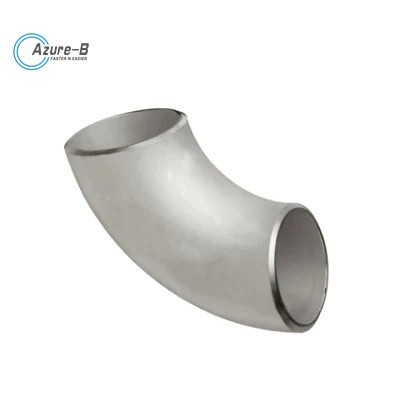
We also offer other related products that might be of interest to you. For example, if you need a different angle elbow, we have Butt Weld 180 Deg Pipe Elbow. These 180 - degree elbows are useful for reversing the direction of flow in a piping system. And if you're looking for a general buttweld elbow, check out our Buttweld Elbow options. We also have Welded 90 Deg Elbow in various materials and sizes.
In conclusion, a 1.5" 90 Degree Elbow can be suitable for high - temperature applications, but it depends on the material and the manufacturing process. Stainless steel and alloy steel are great choices for high - temperature environments, while carbon steel might have its limitations. If you're unsure which type of elbow is right for your specific application, we're here to help. We have a team of experts who can provide you with the best advice based on your needs.
So, if you're interested in purchasing a 1.5" 90 Degree Elbow or any of our other products, we'd love to have a chat with you. Contact us to start a discussion about your requirements and let's find the perfect solution for your high - temperature piping needs.
References:
- "Handbook of Piping Design" by Cameron L. Young
- "Materials Science and Engineering: An Introduction" by William D. Callister Jr. and David G. Rethwisch