

How to test the quality of a carbon steel tee?
Oct 21, 2025
Leave a message
As a seasoned supplier of carbon steel tees, I understand the critical importance of ensuring the quality of these essential pipe fittings. Carbon steel tees are widely used in various industries, including oil and gas, chemical processing, and water treatment, where they play a crucial role in directing the flow of fluids and gases. In this blog post, I will share some valuable insights on how to test the quality of a carbon steel tee, drawing on my years of experience in the industry.
Visual Inspection
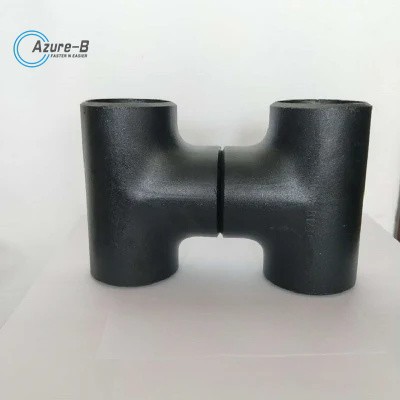
The first step in testing the quality of a carbon steel tee is a thorough visual inspection. This involves examining the tee for any visible defects, such as cracks, porosity, or surface irregularities. A high-quality carbon steel tee should have a smooth, uniform surface finish without any signs of damage or corrosion.
During the visual inspection, pay close attention to the welds, if applicable. Welded carbon steel tees should have well-defined, continuous welds that are free from cracks, porosity, and other defects. The welds should also be properly aligned and have a consistent bead size and shape.
In addition to checking for surface defects, it is also important to verify the dimensions of the carbon steel tee. Use a caliper or other measuring tools to ensure that the tee meets the specified dimensions, including the outside diameter, wall thickness, and branch length. Any deviations from the specified dimensions could indicate a quality issue.
Chemical Analysis
Another important aspect of testing the quality of a carbon steel tee is to perform a chemical analysis. This involves determining the chemical composition of the steel used in the tee to ensure that it meets the required specifications.
The chemical composition of carbon steel can have a significant impact on its mechanical properties, such as strength, hardness, and corrosion resistance. By analyzing the chemical composition, you can verify that the steel contains the appropriate amounts of carbon, manganese, silicon, and other elements.

There are several methods available for performing a chemical analysis, including spectroscopy, wet chemical analysis, and X-ray fluorescence (XRF). Each method has its own advantages and limitations, so it is important to choose the method that is most suitable for your specific needs.
Mechanical Testing
Mechanical testing is another crucial step in evaluating the quality of a carbon steel tee. This involves subjecting the tee to various mechanical tests to determine its strength, ductility, and other mechanical properties.
One of the most common mechanical tests performed on carbon steel tees is the tensile test. In a tensile test, a sample of the tee is pulled until it breaks, and the force required to break the sample is measured. This test provides information about the tee's ultimate tensile strength, yield strength, and elongation.
Another important mechanical test is the hardness test. Hardness is a measure of a material's resistance to indentation or scratching. By performing a hardness test, you can determine the hardness of the carbon steel tee and ensure that it meets the required specifications.
In addition to tensile and hardness tests, other mechanical tests that may be performed on carbon steel tees include impact testing, bend testing, and pressure testing. These tests can provide valuable information about the tee's toughness, ductility, and ability to withstand pressure.
Non-Destructive Testing
Non-destructive testing (NDT) is a group of inspection techniques that can be used to detect internal defects in carbon steel tees without damaging the tee. NDT methods are particularly useful for detecting defects that are not visible on the surface of the tee, such as cracks, porosity, and inclusions.
One of the most commonly used NDT methods for carbon steel tees is ultrasonic testing (UT). UT uses high-frequency sound waves to detect internal defects in the tee. By analyzing the reflected sound waves, technicians can identify the location and size of any defects.
Another popular NDT method is magnetic particle testing (MT). MT is used to detect surface and near-surface defects in ferromagnetic materials, such as carbon steel. This method involves applying a magnetic field to the tee and then applying iron particles to the surface. Any defects in the tee will cause the magnetic field to distort, causing the iron particles to accumulate at the defect site.
Other NDT methods that may be used to test the quality of carbon steel tees include radiography, liquid penetrant testing, and eddy current testing. Each method has its own advantages and limitations, so it is important to choose the method that is most suitable for your specific needs.
Quality Assurance and Certification
In addition to performing the above tests, it is also important to ensure that the carbon steel tees you purchase are manufactured in accordance with industry standards and regulations. Look for suppliers who have a quality management system in place and who are certified to relevant standards, such as ISO 9001.
Certification from recognized organizations, such as the American Society of Mechanical Engineers (ASME) or the International Organization for Standardization (ISO), can provide assurance that the carbon steel tees meet the required quality standards. When purchasing carbon steel tees, ask the supplier for a copy of the relevant certifications and test reports.
Conclusion
Testing the quality of a carbon steel tee is a critical process that requires a combination of visual inspection, chemical analysis, mechanical testing, and non-destructive testing. By following these steps and working with a reputable supplier, you can ensure that the carbon steel tees you purchase are of the highest quality and meet the required specifications.
If you are in the market for high-quality carbon steel tees, we invite you to explore our product range. We offer a wide variety of carbon steel tees, including Equal Tee, ASME B16.9 Unequal Tee, and Steel Reducing Tee Pipe Fittings. Our products are manufactured to the highest standards and undergo rigorous quality testing to ensure their reliability and performance.
If you have any questions or would like to discuss your specific requirements, please do not hesitate to contact us. We look forward to working with you and providing you with the best carbon steel tee solutions for your needs.
References
- ASME B16.9 - Factory-Made Wrought Steel Buttwelding Fittings
- ISO 9001 - Quality management systems - Requirements
- ASTM A234 - Standard Specification for Piping Fittings of Wrought Carbon Steel and Alloy Steel for Moderate and High-Temperature Service