

How to ensure the quality control of Buttweld Equal Tees during production?
Jul 28, 2025
Leave a message
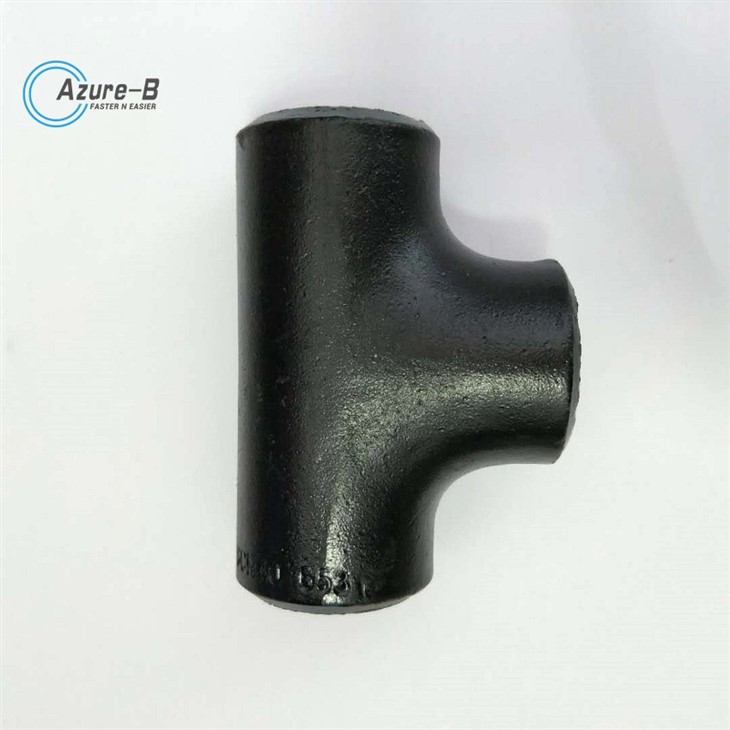
Ensuring the quality control of Buttweld Equal Tees during production is of utmost importance for any supplier. As a Buttweld Equal Tee supplier, I understand the significance of delivering high - quality products to meet the diverse needs of our customers. In this blog, I will share some key strategies and practices that we implement to maintain strict quality control throughout the production process.
1. Raw Material Inspection
The foundation of quality Buttweld Equal Tees lies in the quality of raw materials. We source our raw materials from trusted suppliers who have a proven track record of providing high - grade steel. Before the production begins, every batch of raw materials undergoes a comprehensive inspection.

We check the chemical composition of the steel to ensure it meets the relevant industry standards. For example, the carbon content, sulfur, and phosphorus levels must be within the specified ranges. This is crucial as these elements can significantly affect the mechanical properties of the final product. We use advanced analytical equipment such as spectrometers to accurately determine the chemical composition.
In addition to chemical analysis, we also conduct physical inspections. We check for surface defects, such as cracks, pits, or scratches on the raw steel pipes. Any material with visible defects is rejected immediately. This initial screening helps to prevent potential quality issues from occurring later in the production process.
2. Manufacturing Process Control
Cutting and Shaping
The first step in manufacturing Buttweld Equal Tees is cutting the raw steel pipes into appropriate lengths. We use precision cutting equipment to ensure accurate dimensions. The cutting process must be clean and free of burrs. After cutting, the pipes are shaped into the tee configuration. This is typically done through hot or cold forming processes.
During the forming process, we closely monitor the temperature, pressure, and deformation rate. These parameters can have a significant impact on the final shape and integrity of the tee. For example, if the temperature is too high during hot forming, it can lead to grain growth and reduced mechanical properties. On the other hand, if the pressure is not evenly distributed during cold forming, it can cause uneven wall thickness in the tee.
Welding
Welding is a critical step in the production of Buttweld Equal Tees. We use qualified welders who have extensive experience and relevant certifications. The welding process is carefully controlled to ensure strong and reliable joints.
We select the appropriate welding method and filler materials based on the type of steel and the application requirements. For example, shielded metal arc welding (SMAW), gas tungsten arc welding (GTAW), or submerged arc welding (SAW) may be used depending on the situation. Before welding, the surfaces to be joined are thoroughly cleaned to remove any contaminants.
During the welding process, we monitor the welding current, voltage, and travel speed. These parameters affect the quality of the weld bead, including its size, shape, and penetration. After welding, we conduct non - destructive testing (NDT) methods such as ultrasonic testing (UT), radiographic testing (RT), or magnetic particle testing (MT) to detect any internal or surface defects in the weld.
Heat Treatment
Heat treatment is often used to improve the mechanical properties of Buttweld Equal Tees. After welding, the tees may undergo processes such as annealing, normalizing, or quenching and tempering.
The heat treatment process is carefully controlled to ensure that the desired hardness, strength, and toughness are achieved. We use furnaces with precise temperature control systems to maintain the correct temperature and soaking time. After heat treatment, the tees are tested again to verify that the mechanical properties meet the specifications.
3. In - process Quality Checks
Throughout the production process, we conduct regular in - process quality checks. These checks are performed at various stages, from raw material inspection to the final finishing.
We measure the dimensions of the tees at different intervals to ensure they are within the tolerance limits. This includes checking the outer diameter, wall thickness, and branch length. Any deviations from the specifications are immediately addressed.
We also inspect the surface finish of the tees. A smooth and uniform surface finish is not only aesthetically pleasing but also important for corrosion resistance. We use surface roughness measurement tools to ensure that the surface finish meets the requirements.
4. Final Inspection and Testing
Before the Buttweld Equal Tees are shipped to the customers, they undergo a final inspection and testing. This is the last line of defense to ensure that only high - quality products leave our facility.
We conduct a final visual inspection to check for any remaining surface defects or cosmetic issues. We also perform a final dimensional check to ensure that all the dimensions are within the specified tolerances.
In addition to visual and dimensional inspections, we conduct hydrostatic testing. This involves filling the tee with water and pressurizing it to a specified level for a certain period of time. The purpose of hydrostatic testing is to check for any leaks or weaknesses in the tee. If any leakage is detected during the test, the tee is rejected and re - worked or scrapped.
5. Quality Management System
To ensure consistent quality control, we have implemented a comprehensive quality management system (QMS). Our QMS is based on international standards such as ISO 9001.
The QMS includes procedures for every aspect of the production process, from raw material procurement to product delivery. It also includes documentation and record - keeping requirements to track the quality history of each batch of products.
We conduct regular internal audits and management reviews to evaluate the effectiveness of our QMS. Any non - conformities identified during the audits are promptly addressed, and corrective and preventive actions are taken to prevent recurrence.
6. Continuous Improvement
Quality control is not a one - time activity but an ongoing process. We are committed to continuous improvement in our quality control practices.
We collect feedback from our customers on a regular basis. This feedback helps us to identify areas for improvement and to make necessary adjustments to our production processes. We also keep up with the latest industry trends and technological advancements to ensure that we are using the most efficient and effective quality control methods.
Conclusion
As a Buttweld Equal Tee supplier, ensuring the quality control of our products during production is our top priority. By implementing strict raw material inspection, controlling the manufacturing process, conducting in - process and final inspections, and maintaining a comprehensive quality management system, we are able to deliver high - quality Buttweld Equal Tees to our customers.
If you are in the market for high - quality Steel Reducing Tee Pipe Fittings, Buttweld Reducing Tee, or Butt Weld Reducing Tee, we would be delighted to discuss your requirements. Our commitment to quality and customer satisfaction makes us a reliable partner for your piping needs. Please feel free to contact us to start a procurement discussion.
References
- ASME B16.9: Factory - Made Wrought Buttwelding Fittings
- ASTM A234: Standard Specification for Piping Fittings of Wrought Carbon Steel and Alloy Steel for Moderate and High - Temperature Service
- ISO 9001: Quality management systems — Requirements