

How is a steel pipe elbow manufactured?
Dec 29, 2025
Leave a message
Hey there! As a steel pipe elbow supplier, I'm super stoked to take you through the ins and outs of how these nifty little things are made. Steel pipe elbows are crucial components in all sorts of industries, from plumbing to oil and gas. They help redirect the flow of fluids and gases, making sure everything runs smoothly. So, let's dive right in and explore the manufacturing process.
Starting with the Raw Materials
The first step in making a steel pipe elbow is getting the right raw materials. We usually use carbon steel, stainless steel, or alloy steel, depending on the specific requirements of the project. These materials are known for their strength, durability, and resistance to corrosion.
Carbon steel is the most commonly used material for steel pipe elbows. It's relatively inexpensive and has good mechanical properties. Stainless steel, on the other hand, is more corrosion-resistant and is often used in applications where hygiene is a concern, such as in the food and beverage industry. Alloy steel is a combination of different metals and is used when extra strength and durability are needed.
Once we've selected the right material, we cut it into the appropriate length and shape. This is usually done using a saw or a cutting machine. The size and shape of the raw material will depend on the size and angle of the elbow we're making.
Forming the Elbow
After the raw material has been cut, it's time to form the elbow. There are several methods we can use to do this, but the most common ones are hot forming and cold forming.
Hot Forming
Hot forming involves heating the steel to a high temperature, usually around 1,000 to 1,200 degrees Celsius. This makes the steel more malleable and easier to shape. Once the steel has been heated, it's placed in a die and pressed into the desired shape. The die is a specially designed tool that has the shape of the elbow we want to make.
Hot forming is a great method for making large and thick-walled elbows. It allows us to achieve precise shapes and angles, and it also helps to improve the mechanical properties of the steel. However, it's a more expensive and time-consuming process than cold forming.
Cold Forming
Cold forming, as the name suggests, involves shaping the steel at room temperature. This is done using a variety of tools and techniques, such as bending, rolling, and pressing. Cold forming is a more cost-effective and efficient method than hot forming, especially for making small and thin-walled elbows.
One of the most common cold forming methods is bending. This involves using a bending machine to bend the steel into the desired shape. The bending machine has a set of rollers that apply pressure to the steel, causing it to bend. The angle of the bend can be adjusted by changing the position of the rollers.

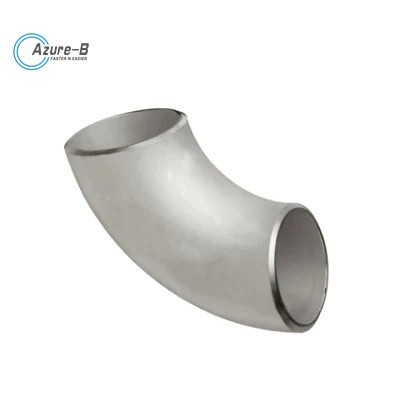
Another cold forming method is rolling. This involves passing the steel through a set of rollers that gradually shape it into the desired form. Rolling is a great method for making long and continuous elbows, such as those used in pipelines.
Welding (if necessary)
In some cases, we may need to weld the elbow to other components or to join two pieces of elbow together. Welding is a process that involves melting the edges of the steel and fusing them together using a filler material.
There are several types of welding methods we can use, such as arc welding, gas welding, and resistance welding. The type of welding method we choose will depend on the type of steel we're using, the thickness of the steel, and the specific requirements of the project.
Arc welding is the most commonly used welding method for steel pipe elbows. It involves using an electric arc to melt the edges of the steel and the filler material. The filler material is usually a rod or a wire that is made of the same or similar material as the steel.
Gas welding is another welding method that is sometimes used for steel pipe elbows. It involves using a flame to melt the edges of the steel and the filler material. Gas welding is a slower and more labor-intensive process than arc welding, but it can be used for thinner materials and in situations where precision is required.
Resistance welding is a welding method that is used for joining two pieces of steel together. It involves passing an electric current through the steel, which causes the edges to heat up and melt. Resistance welding is a fast and efficient method, but it's only suitable for joining thin materials.
Heat Treatment
After the elbow has been formed and welded (if necessary), it's usually heat-treated to improve its mechanical properties. Heat treatment involves heating the steel to a specific temperature and then cooling it at a controlled rate.
There are several types of heat treatment processes we can use, such as annealing, normalizing, quenching, and tempering. The type of heat treatment process we choose will depend on the type of steel we're using, the specific requirements of the project, and the desired mechanical properties of the elbow.
Annealing is a heat treatment process that involves heating the steel to a high temperature and then cooling it slowly. This helps to relieve internal stresses in the steel and improve its ductility and toughness.
Normalizing is a heat treatment process that involves heating the steel to a high temperature and then cooling it in air. This helps to refine the grain structure of the steel and improve its strength and hardness.
Quenching is a heat treatment process that involves heating the steel to a high temperature and then cooling it rapidly in a liquid, such as water or oil. This helps to harden the steel and improve its wear resistance.
Tempering is a heat treatment process that involves heating the quenched steel to a lower temperature and then cooling it slowly. This helps to reduce the brittleness of the steel and improve its toughness.
Finishing and Quality Control
Once the elbow has been heat-treated, it's time to finish it and perform quality control checks. Finishing involves removing any rough edges or burrs from the elbow and applying a protective coating to prevent corrosion.
The protective coating can be a paint, a powder coating, or a galvanized coating. The type of coating we choose will depend on the specific requirements of the project and the environment in which the elbow will be used.
Quality control is an important part of the manufacturing process. We use a variety of testing methods to ensure that the elbow meets the required standards and specifications. Some of the common testing methods we use include visual inspection, dimensional inspection, non-destructive testing, and mechanical testing.
Visual inspection involves examining the elbow for any visible defects, such as cracks, holes, or surface imperfections. Dimensional inspection involves measuring the dimensions of the elbow to ensure that it meets the required specifications. Non-destructive testing involves using techniques such as ultrasonic testing, magnetic particle testing, and radiographic testing to detect any internal defects in the elbow. Mechanical testing involves testing the mechanical properties of the elbow, such as its strength, hardness, and ductility.
Types of Steel Pipe Elbows
There are several types of steel pipe elbows available, each with its own unique features and applications. Some of the most common types of steel pipe elbows include:
- 90 Degree Elbows: These are the most commonly used type of steel pipe elbows. They are used to change the direction of the flow of fluids or gases by 90 degrees. You can check out our Welded 90 Deg Elbow and Seamless 90° Pipe Elbow for more details.
- 45 Degree Elbows: These are used to change the direction of the flow of fluids or gases by 45 degrees. They are often used in situations where a more gradual change in direction is required.
- 180 Degree Elbows: These are used to change the direction of the flow of fluids or gases by 180 degrees. They are often used in situations where the fluid or gas needs to be redirected back in the same direction.
- Long Radius Elbows: These are elbows with a larger radius than standard elbows. They are used in situations where a smoother flow of fluids or gases is required.
- Short Radius Elbows: These are elbows with a smaller radius than standard elbows. They are used in situations where space is limited.
- 90 Degree Elbow Male Female: This type of elbow has a male end on one side and a female end on the other side. It's useful for connecting pipes in a specific way.
Conclusion
Well, that's a wrap on how a steel pipe elbow is manufactured. As you can see, it's a complex process that involves several steps and techniques. But with the right materials, equipment, and expertise, we're able to produce high-quality steel pipe elbows that meet the needs of our customers.
If you're in the market for steel pipe elbows, whether it's for a small plumbing project or a large industrial application, we'd love to hear from you. We offer a wide range of steel pipe elbows in different sizes, angles, and materials. Our team of experts can help you choose the right elbow for your specific needs and provide you with a competitive quote.
So, don't hesitate to reach out to us for more information or to start a procurement discussion. We're here to make sure you get the best steel pipe elbows for your money.
References
- ASME B16.9 - Factory-Made Wrought Steel Buttwelding Fittings
- ASTM A234 - Standard Specification for Piping Fittings of Wrought Carbon Steel and Alloy Steel for Moderate and High-Temperature Service
- API 5L - Specification for Line Pipe