

Can Flange ANSI ASME B16.5 be used in vacuum applications?
Nov 26, 2025
Leave a message
Hey there! I'm a supplier of Flange ANSI ASME B16.5, and today I wanna chat about whether these flanges can be used in vacuum applications. It's a question I get a lot from customers, so let's dig into it.
First off, let's understand what Flange ANSI ASME B16.5 is all about. These flanges are widely used in the industry. They follow the standards set by the American National Standards Institute (ANSI) and the American Society of Mechanical Engineers (ASME). The B16.5 standard covers pipe flanges and flanged fittings from NPS 1/2 through NPS 24 in pressure classes 150, 300, 400, 600, 900, 1500, and 2500. You can check out more details about Flange ASME B16.5 Class 150 on our website.
Now, when it comes to vacuum applications, things get a bit tricky. Vacuum systems require components that can withstand the pressure difference between the inside of the system (low pressure) and the outside (atmospheric pressure). So, can our Flange ANSI ASME B16.5 handle this?
Well, the short answer is yes, but with some considerations. These flanges are designed primarily for pressure applications, but they can work in vacuum scenarios too. The key lies in the design, material, and installation of the flanges.
Design and Material
The design of Flange ANSI ASME B16.5 is robust. It's made to provide a reliable connection between pipes or other equipment. The flanges are usually forged, which gives them good strength and durability. For example, our ASME B16.5 Class 150 Forged Flanges are made from high - quality materials that can resist deformation under pressure, whether it's positive or negative.
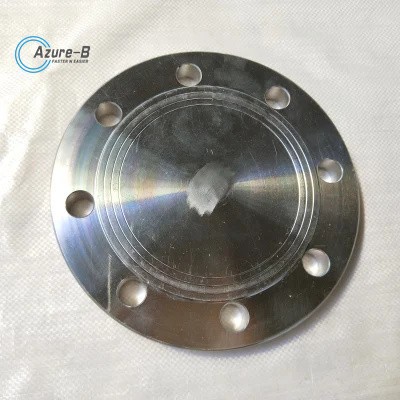

The material selection is crucial. Most of these flanges are made from carbon steel, stainless steel, or alloy steel. Carbon steel is cost - effective and has good mechanical properties. Stainless steel, on the other hand, offers excellent corrosion resistance, which is important in many vacuum applications where the system might be exposed to corrosive substances.
Sealing in Vacuum Applications
One of the biggest challenges in using flanges in vacuum applications is achieving a proper seal. A leak in a vacuum system can lead to a loss of vacuum, which can affect the performance of the entire system.
Flange ANSI ASME B16.5 uses gaskets to create a seal. The type of gasket you choose depends on the vacuum level, temperature, and the media in the system. For low - vacuum applications, a simple rubber or cork gasket might work. But for high - vacuum applications, you'll need more advanced gaskets like metal - jacketed gaskets or spiral - wound gaskets.
Installation and Maintenance
Proper installation is essential for the flanges to work well in vacuum applications. The bolts need to be tightened evenly to ensure a uniform pressure on the gasket. If the bolts are not tightened correctly, it can cause the gasket to deform and lead to leaks.
Regular maintenance is also important. You should check the flanges and gaskets for any signs of wear or damage. If you notice any issues, replace the damaged parts immediately to prevent further problems.
Limitations
While Flange ANSI ASME B16.5 can be used in vacuum applications, there are some limitations. These flanges are not specifically designed for ultra - high vacuum (UHV) applications. In UHV systems, the requirements for cleanliness, outgassing, and sealing are much more stringent.
The surface finish of the flanges can also be a factor. In high - vacuum applications, a smooth surface finish is preferred to reduce the risk of leaks. Some standard Flange ANSI ASME B16.5 might not have the ideal surface finish for these demanding applications.
Real - World Examples
I've seen many customers use our Flange ANSI ASME B16.5 in vacuum applications successfully. For example, in some industrial drying processes, a vacuum is created to remove moisture from the product. Our flanges are used to connect the pipes in the vacuum system. They've been performing well, providing a reliable connection and maintaining the required vacuum level.
Another example is in some chemical processing plants. Vacuum distillation is a common process, and our flanges are used to connect the distillation columns and other equipment in the vacuum system.
Conclusion
So, to sum it up, Flange ANSI ASME B16.5 can be used in vacuum applications, but you need to consider the design, material, sealing, installation, and maintenance. It's a great option for many low - to medium - vacuum applications. You can find more information about Flanges As Per ASME B16.5 on our website.
If you're thinking about using our flanges in your vacuum application, don't hesitate to reach out. We can help you choose the right flanges, gaskets, and other components for your specific needs. Whether you're a small business or a large industrial plant, we're here to support you. Contact us for a detailed discussion about your requirements and let's work together to find the best solution for your vacuum system.
References
- ASME B16.5 Standard for Pipe Flanges and Flanged Fittings
- Industrial Vacuum Technology Handbook
- Various industry case studies on vacuum system design and component selection